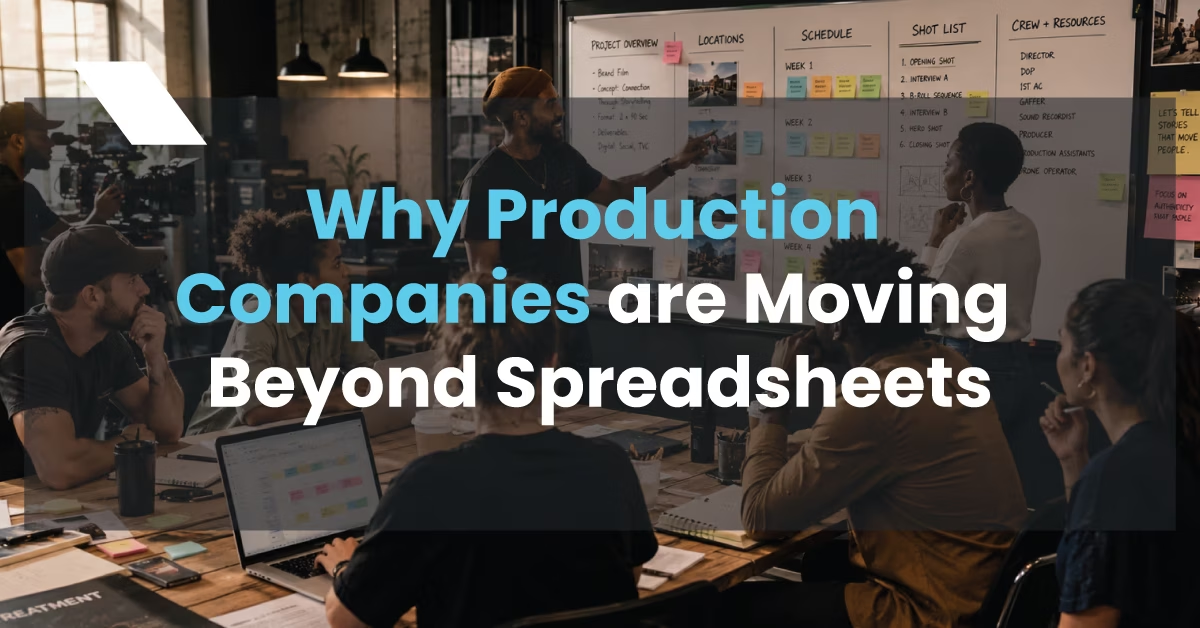
For decades, the spreadsheet was the undisputed workhorse of the film and television industry. From line producers drafting initial budgets in Excel to production coordinators manually tweaking call sheets in Google Sheets, grid-based software offered a free, flexible way to organise chaos.
However, as production schedules tighten, budgets face scrutiny, and crews operate in high-velocity environments, the reliance on static spreadsheets has shifted from a convenience to a critical operational liability. Modern film production is dynamic, interconnected, and fast-paced; spreadsheets are rigid, isolated, and prone to human error.
Forward-thinking production companies across the globe are moving away from disconnected workbooks and embracing cloud-native, specialised software ecosystems designed specifically for physical production.
The Hidden Cost of "Spreadsheet Friction"
While spreadsheets seem cost-effective on the surface, they introduce subtle operational bottlenecks that accumulate into massive financial bloat:
- Version Control Disasters: When a call time shifts or a location changes late at night, updating a static file often leads to multiple conflicting versions circulating among crew members.
- Data Silos: Information entered into a budget spreadsheet rarely syncs automatically with scheduling sheets, crew rosters, or accounting ledgers, requiring hours of repetitive manual re-entry.
- Lack of Real-Time Collaboration: Traditional spreadsheets fail to notify department heads instantly when gear requirements or crew availabilities change on set.
- Human Error: A single broken formula or accidental cell deletion in a complex production budget can lead to costly financial miscalculations during wrap.
The Modern Production Tech Stack: Specialized Tools Transforming Workflows
Rather than forcing a general-purpose spreadsheet to act as an all-in-one production engine, leading production teams assemble purpose-built tech stacks tailored to specific phases of the production lifecycle.
- Pre-Production & Breakdown
- StudioBinder & Yamdu: Modern web-based platforms that transform raw screenplays into interactive shooting schedules, script breakdowns, and visual storyboards. Instead of manually copying scene details into Excel, these platforms automatically extract locations, cast, and props directly from script uploads.
- FDX / Final Draft: Industry-standard screenwriting software that integrates seamlessly with scheduling tools to ensure any rewrite automatically propagates through pre-production breakdowns.
- Financial Management & Budgeting
- Movie Magic Budgeting & Accounting: The long-standing industry standard for complex feature and television finance. It handles multi-currency rates, complex union fringes, and tax incentive tracking with precision that general spreadsheet templates simply cannot match.
- Hot Budget: Widely used in commercial production to handle fast-paced budgeting and wrap reconciliations with built-in industry rate tables.
- Crew Logistics, Scheduling & Administration
Finding, vetting, optioning, and contracting crew remains one of the most labour-intensive tasks in physical production. Manually managing availability, deal memos, overtime rules, and tax compliance via spreadsheets and messaging apps regularly drains production coordinators’ time.
- QuickCrew: Designed specifically to solve crew management friction, QuickCrew replaces disconnected booking sheets and endless messaging threads with a centralised, real-time command centre. Built around modern industry workflows, it enables production teams to access vetted freelance crew databases, check live availability calendars, dispatch option holds, and automate digital deal memos in minutes.
By unifying timesheets, crew rosters, and invoicing into one streamlined digital platform, systems like QuickCrew eliminate administrative errors while ensuring crew members receive clear, timely communication and transparent payments.
-
Communication & On-Set Operations
- Slack / WhatsApp Business: Used for structured departmental messaging, replacing messy bulk email threads.
- Dropbox / Frame.io: Essential for real-time camera card reviews, daily rushes, and remote director/producer sign-offs.
Key Benefits of Moving to Integrated Production Software
- Speed and Responsiveness: Automated workflows allow production offices to react to last-minute location changes, weather delays, or talent availability shifts in seconds rather than hours.
- Audit-Ready Compliance: Digital tools track approval histories, contract signatures, and time-stamped logs, making post-production audits and tax rebate submissions seamless.
- Improved Crew Experience: Freelancers appreciate clear, digital contracts and instant call sheet notifications accessible directly on their mobile devices, fostering stronger professional relationships.
- Data Security & Privacy: Centralised platforms offer role-based permissions, keeping sensitive talent contracts, financial rates, and personal details secure.
Embracing the Future of Production
Moving beyond spreadsheets is no longer about adopting “fancy tech”. It is about building an agile operational framework capable of meeting the demands of modern filmmaking. By equipping line producers, coordinators, and department heads with dedicated tools like StudioBinder, Movie Magic, and QuickCrew, production houses reduce administrative bloat, protect their budgets, and create space for what truly matters: putting great stories on screen.